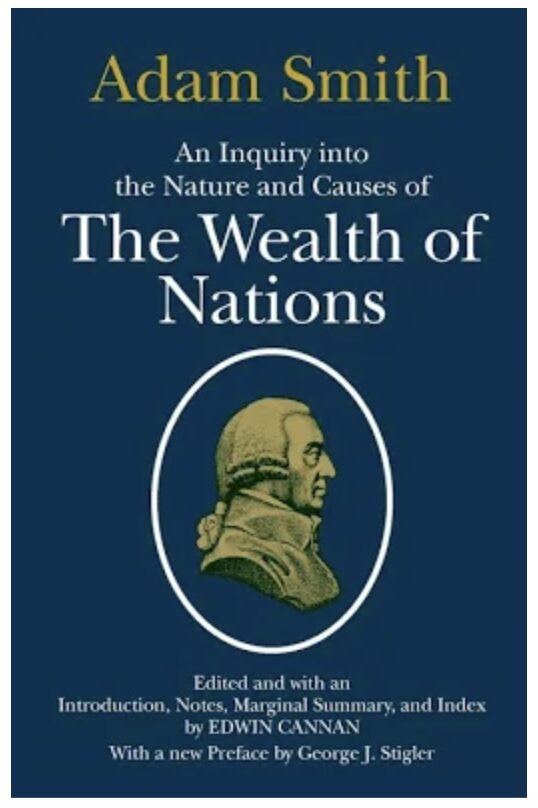
Today is the 250th anniversary of the most influential economics book in world history: Adam Smith’s: The Wealth of Nations, published March 9, 1776.
It is an amazing coincidence of history that the two greatest documents extolling the virtues of liberty, the Declaration of Independence and The Wealth of Nations, were written exactly 250 years ago, less than six months apart.
Our economic advisory council member Mark Skousen has written a wonderful short essay on the influence of this book and we briefly paraphrase his tribute to Adam Smith: The Wealth of Nations argued that governments should allow every individual “to pursue his own interest” and through the power of an “invisible hand,” this would promote the interests of society.
Prosperity, Smith argued, does not flow primarily from royal decrees, bureaucratic planning, or the accumulation of gold and silver. It emerges from the decentralized decisions of millions of individuals pursuing their own improvement within a framework of justice and robust competition.
In a world dominated by monarchy, guild privilege, trade restrictions, and state-sponsored monopolies, this was revolutionary doctrine.
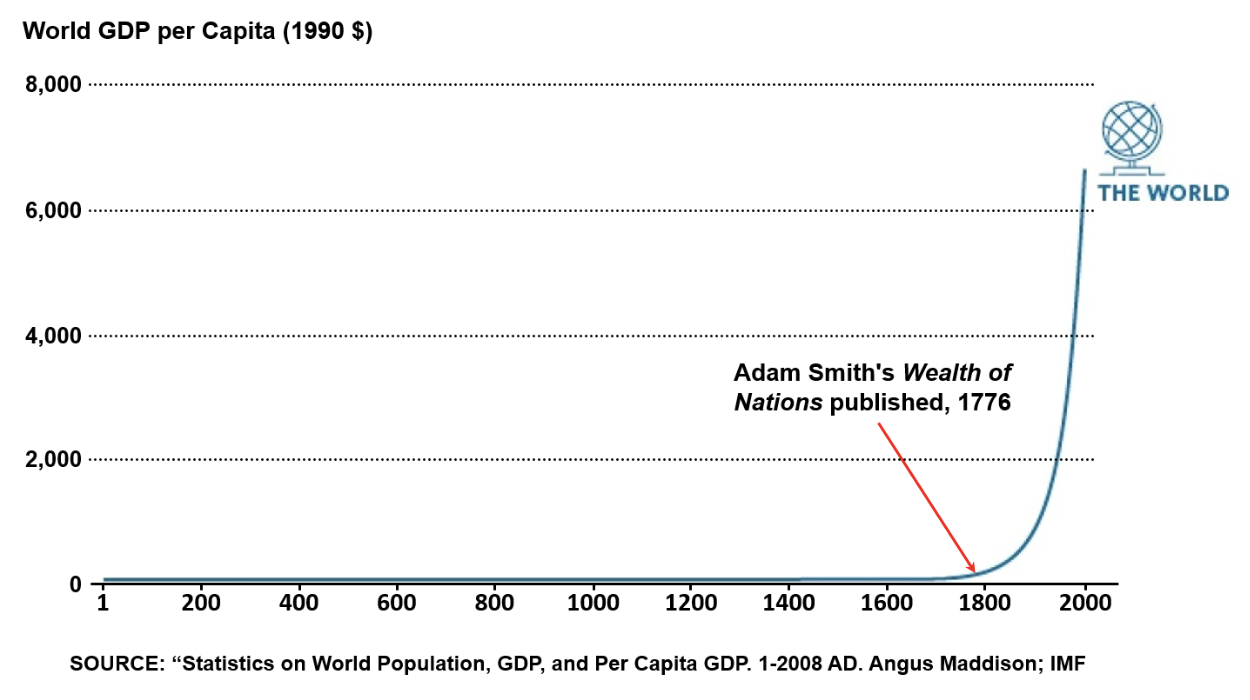
The book has been rightly enshrined as the intellectual and moral launching pad for what ensued in the decades to follow: the industrial revolution and the greatest advancements in economic wellbeing in human history. Look what happened after its publication: