

Another domino has fallen in Central America.
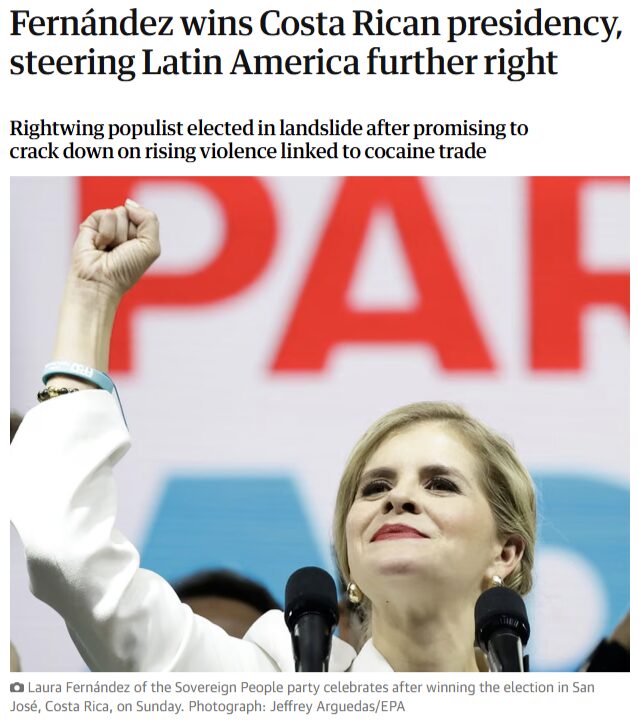
Sunday’s landslide victory of Laura Fernández, the 39-year-old conservative candidate for president of Costa Rica, is welcome news and part of a continuing trend sweeping Latin America: freer markets and closer ties with the U.S.
The trend began in late 2023 with the election of Javier Milei in Argentina. Since then, Milei’s free-market approach has paid huge dividends. Inflation has declined from 300% a year to just 30%, the budget deficit is now zero and the poverty rate has plunged from 52% to 31%. His party won October’s mid-term election in a landslide.
Inspired by both Milei and the U.S., country after country in Latin America is moving to the right:
-
-
- Ecuador: President Daniel Noboa won re-election in April of last year, defeating leftist Luisa Gonzalez with 56% of the vote.
- Bolivia: In August, the socialist MAS party that had been In power for 20 years was repudiated with the victory of conservative Rodrigo Paz.
- Honduras: Conservative Nasry Asfura won November’s election in part due to an explicit endorsement from President Trump.
- Chile: December saw free-market candidate José Antonio Kast win a landslide 58% victory, turning a left-wing government out of office.
-
The stepped-up activity of drug gangs has heightened fears about crime and become a potent campaign issue. But so too has been the economy.
In Costa Rica, Fernandez ran on her three-year record as Minister of Economic Policy, which saw growth of 4% to 5% a year, unemployment of just 7%, low inflation and debt reduction.
She promised to “fight tirelessly” to promote economic growth, saying it was a necessity to lift people out of poverty.
If New Yorkers want to escape socialism and high taxes, maybe they need to emigrate to Costa Rica.
