

Anybody considering supporting the Democrats’ proposed wealth tax on billionaires should be aware of how the federal income tax started out.
Economist Phillip W. Magness writing in the March 5 Coolidge Review:
What became the Sixteenth Amendment in 1913 emerged out of a deeply conservative Congress four years earlier. It carried the endorsement of President William Howard Taft [a Republican]… By modern standards, the Underwood Act’s income tax rates were minuscule. Most earners paid a tax rate of 0% of income. The 1% rate kicked in at income of $3,000, which was approximately $48,000 in today’s dollars.
The next-lowest bracket didn’t kick in until earnings exceeded $20,000 (about $650,000 today), and incomes beyond that threshold were taxed at just 2%. The highest rate applied only to the ultra-rich, taxing incomes above $500,000 (more than $16 million today) at just 7%. Few, if any, at the time viewed these percentages as onerous, let alone a serious foray into wide-scale redistribution.
Only 3% of earners paid any income tax. It took until World War II for the “class tax” to become the “mass tax.”
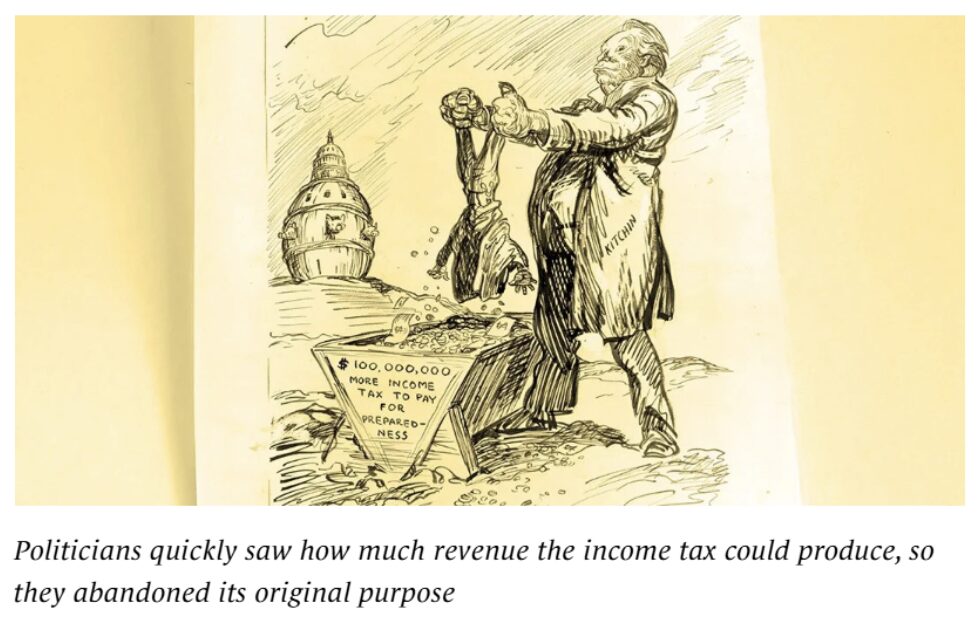
Remember this when you hear politicians say they just want to tax the rich.