A silver lining of this year’s turmoil over energy prices is that it just might accelerate the death of the Jones Act, a century old law that requires shipping from one U.S. port to another to be U.S. manufactured, owned, and crewed.
It has clearly failed in its purported goal of propping up the U.S. Merchant Marine. There are only 92 Jones Act-compliant ships today, of which only 55 are tankers. Even U.S. flagged ships can’t carry cargo between American ports if they weren’t also built in the U.S. and carried by American ships. The rule raises prices on all consumer goods but especially on fossil fuels and food.
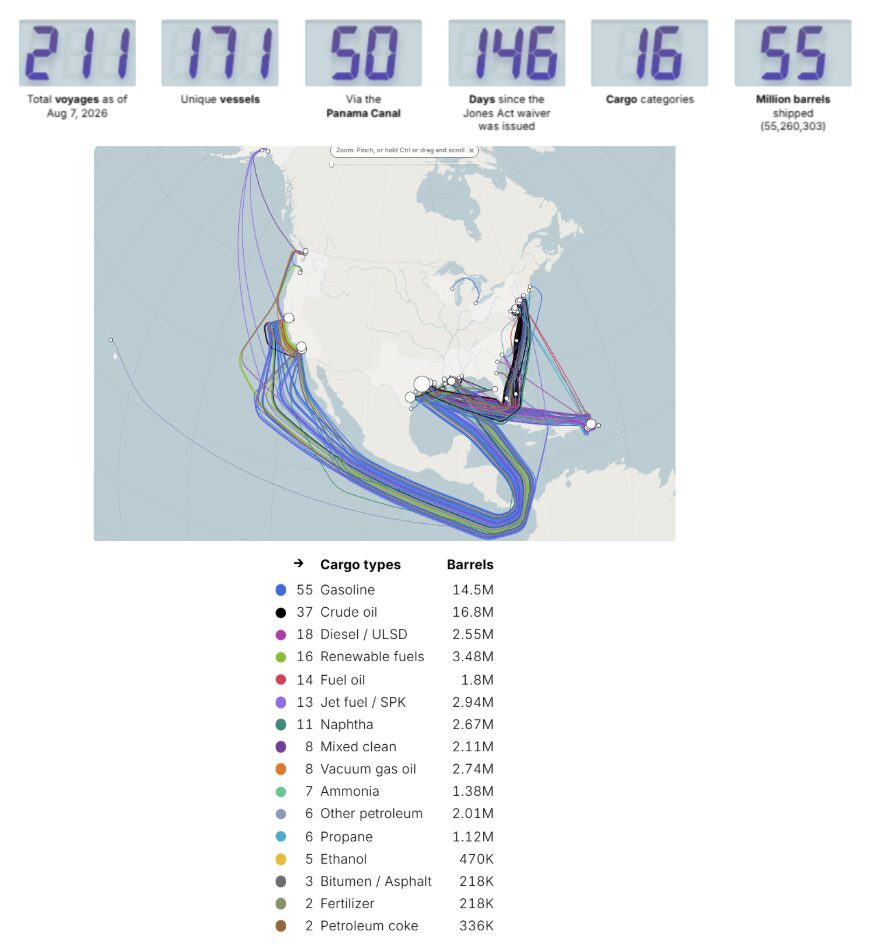
President Trump suspended the Jones Act after the Iran conflict erupted in March, and extended it in April. He has now added another 90-day extension. There has since been a 50% increase in domestic shipments between U.S. ports, much of it gasoline, diesel and jet fuel.
The longer the waiver lasts the more people will learn about its perversity. More than 40% of California’s gasoline imports come from the Bahamas, but they really originate in U.S. refineries, are then shipped to the Bahamas before being transported to California. That’s one reason for $6 a gallon gas prices in many Golden State cities.
Another three months of allowing market forces to operate will build a case that can be presented to Congress early next year asking to repeal the entire monstrosity. Until then, Trump should keep the waiver in place and consumers will continue to save.
Here is the progress so far, according to the Cato Jones Act Waiver Tracker: