

We learned in the 1990s under a Democrat President Bill Clinton that work requirements for welfare benefits reduce poverty by getting low-income Americans into jobs and earning paychecks.
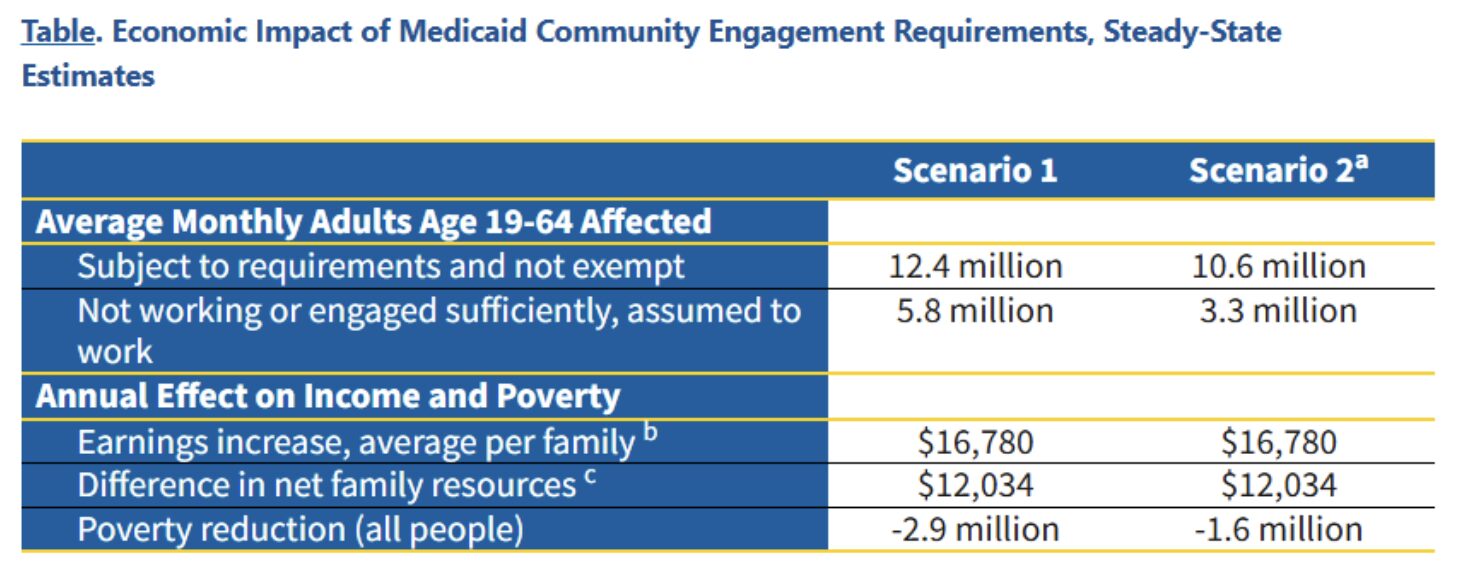
A new study by HHS economist and former UP senior fellow, Casey Mulligan, finds that work requirements for Medicaid “could increase family net income by $12,034 and reduce poverty by 1.6 million to 2.9 million, thereby promoting economic mobility and strengthening labor force participation.”
The table below highlights the results. The term “Medicaid Community Engagement Requirements” is a euphemism for workfare.
The study confirms what years of evidence has documented: work requirements move people off welfare into the dignity of work and onto the ladder of economic opportunity, both leaving them better off and reducing the burden on taxpayers.