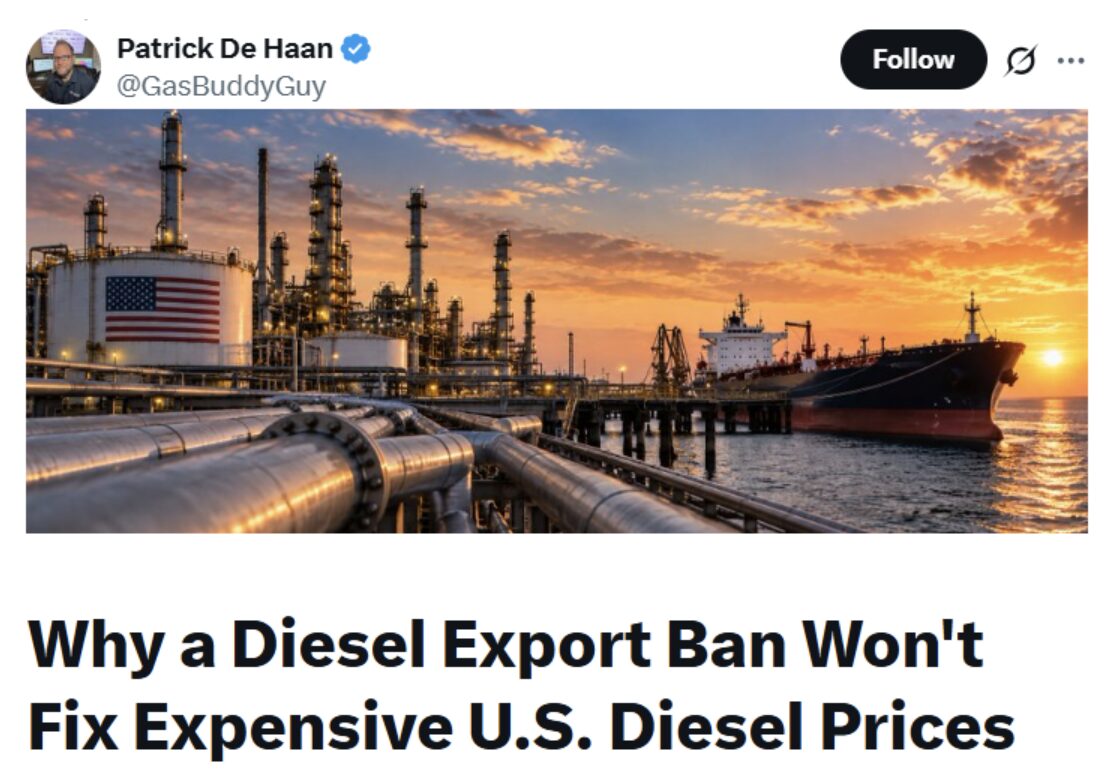
We’ve offered up plenty of ways to lower diesel and gas prices – including a temporary suspension of gas taxes and suspending ethanol and other “renewable” fuel standards. The WSJ has embraced these ideas as well. Instead, Senate Republicans and some White House officials are pushing a hair-brained ban on exporting fuels.
Here’s Patrick De Haan of GasBuddy with a good explanation of a bad idea that wouldn’t even fly in an Economics 101 class:
The U.S. is not short of diesel. The world is. The U.S. is a structural diesel surplus producer. Refineries in the U.S. produce roughly 5.3 million barrels of distillates per day against demand of around 3.6 million barrels per day domestically. The current price spike here and globally is not a U.S. problem- it’s not a domestic shortfall. It’s a global one, being driven largely by Ukrainian drone strikes on Russian refining capacity, in one of the most significant diesel producers in the world, a country that typically supplies one in nine barrels of the world’s diesel, compounded by the conflict with Iran closing the Strait of Hormuz…
U.S. diesel prices are determined not by a U.S. supply and demand balance, but a global one. Keeping distillates and diesel home does not change the world price that reference our prices. You can’t fence off a globally traded commodity by executive order and expect the global price to stop applying to it…
Supplies leave because the world is paying more, not because politicians are forcing them to. An export ban would shove that diesel back into a domestic market that’s already well supplied, risking refinery run cuts, while doing nothing about the global shortage that is actually the mechanism leading diesel prices to record levels.