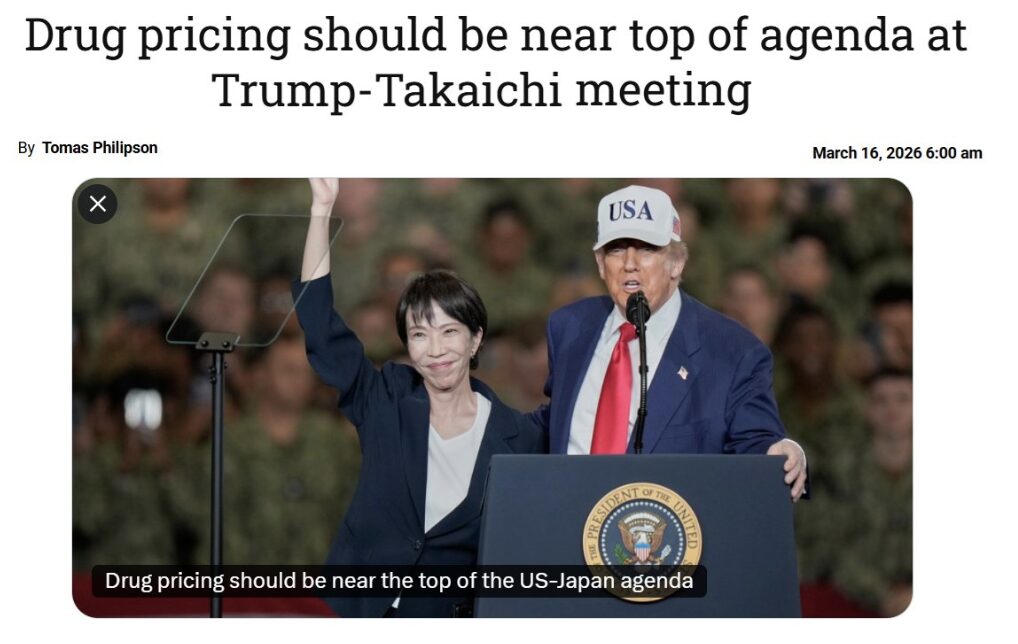
Donald Trump will soon meet with Japanese Prime Minister Sanae Takaichi. Near the top of the agenda should be an effort to secure a pledge from her to ease Japan’s price controls on US-made brand drugs.
UP senior fellow Tomas Philipson makes a compelling case in the Washington Examiner:
For decades, Japan, the world’s fifth-largest economy, has artificially suppressed its spending on innovative medicines, effectively freeriding on U.S. rewards for innovation…
That free-riding is unfair. But it’s also a very tangible threat to our economy and our health. If American companies are losing tens of billions in revenue, they cannot hire as many workers or develop as many life-saving treatments.
Trump has already made it a top priority to combat foreign free-riding. His recent trade deal with the United Kingdom, for example, will require the U.K. to ultimately double its spending on medicines, as a share of GDP, by 2035. This is a more productive way to reduce foreign free-riding than tying countries’ prices together through most-favored-nation policies.
If Trump pushes Takaichi for a similar deal at their upcoming meeting, he would be advancing both countries’ interests. Such an agreement would obviously benefit the U.S. by enabling American biotech companies to expand research efforts, build more facilities, hire more workers, and thereby promote greater patient health across the globe.