

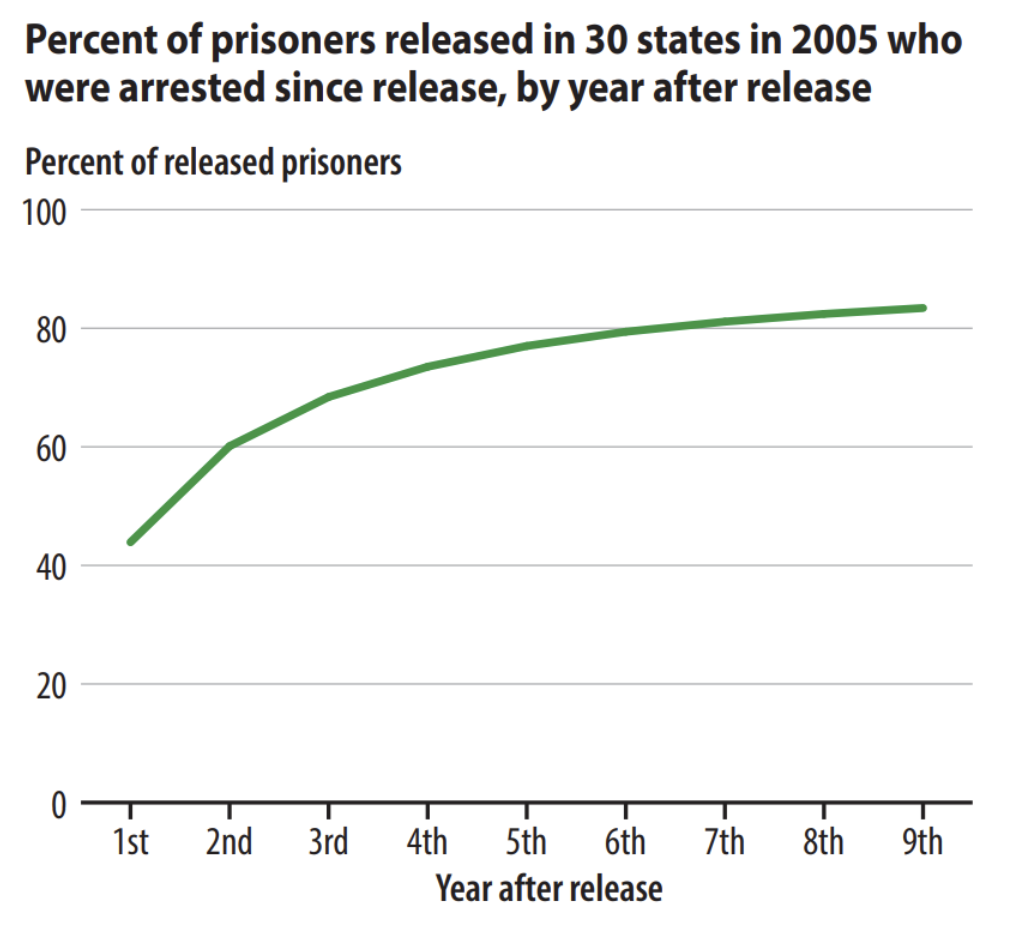
Here’s an abysmal statistic on the failures of our prison system. Almost 70% of U.S. prisoners are rearrested within three years after they are released.
Prison is meant to punish. It is meant to get dangerous criminals off the streets. And the threat of prison can be a deterrent to committing crimes.
But the prison system should also try to rehabilitate the mostly young and minority men who commit stupid and dangerous crimes when they reach their teen years. Lock up a 19-year-old male in prison and he is very likely to be returned to the streets in a few years unskilled, un-hirable, addicted to drugs, and with few skills learned in prison except how to be a career criminal.
Maybe we should try using old-fashioned incentives. Give wardens and prison officials hefty raises and bonuses based on their track record of keeping recidivism rates down.
In other words, the prison-industrial complex should be paid for their performance in ensuring that the corrections industry actually prioritizes programs to “correct” the behavior of inmates.
In 2018, Trump signed the First Step Act, a monumental criminal justice reform bill written to promote rehabilitation, lower recidivism, and shorten excessive sentences in federal prisons. That law expanded opportunities for federal prisoners to attend rehabilitative programs. For example, the Promising People program has impressive results using virtual reality headsets to train prisoners to earn a high school diploma, college degree, or certifications in needed skills like electrical, plumbing, and carpentry.
The Trump administration has a golden opportunity to turn prisons into job training programs that help equip prisoners so they can turn away from crime and turn around their lives and lead productive and happy lives.
Think about how much money will be saved by transforming criminals into employed taxpayers.
Stephen Moore and John L. Evans Jr. co-authored a prominent op-ed published by The Hill titled “We must fix our broken prison system.“